Multifamily Hurricane Preparedness: 7 Steps for Southeast Owners
A practical storm season guide for boutique apartment properties
TL;DR
Insurance is important, but it is not a hurricane plan.
Southeast multifamily owners also need a property checklist, written response procedures, clear tenant communication, established vendors, and defined spending authority. Those pieces protect the building, rental income, and resident trust before, during, and after a storm.
Hurricane Preparation Starts Before the Forecast Cone
The Atlantic hurricane season runs from June 1 through November 30. NOAA’s 2026 outlook calls for 8 to 14 named storms, including 3 to 6 hurricanes. The outlook does not predict where a storm will make landfall.
For an owner, that means a quiet forecast is not permission to wait. Once a storm appears on the map, contractors get busy, supplies tighten, and tenants need answers quickly.
Boutique multifamily properties carry their own version of this risk.
One roof, drainage system, electrical service, or common area can affect several households at once. A problem in one unit can be catastrophic to every resident in the building.
The goal is not to eliminate every risk. It is to make the next decision easier.

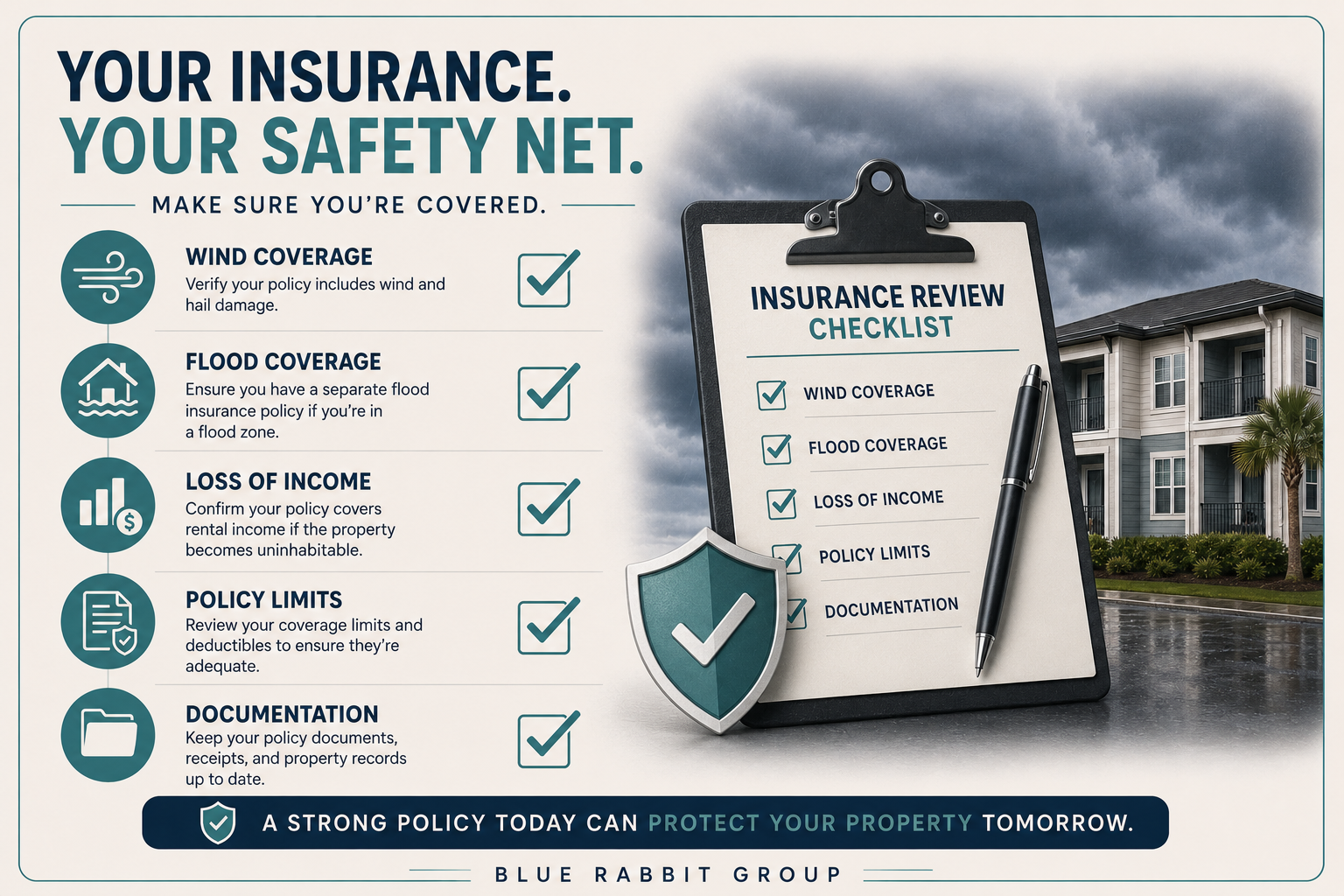
1. Review Insurance With Your Broker
Most owners speak with their insurance broker at renewal and then put the policy away.
Hurricane preparation deserves a separate conversation.
Start with the distinction between being insured and understanding the coverage. The National Flood Insurance Program states that most homeowners, renters, and business policies do not cover flood damage.
Building and contents coverage may also be purchased separately and carry separate deductibles.
Ask your broker to walk through:
Wind and named storm deductibles
Flood exclusions and separate flood coverage
Loss of rental income coverage and its trigger
Current replacement cost assumptions
Per building, per structure, or per unit limits
Documentation required to support a claim
Coverage for debris removal and emergency mitigation
Boutique properties need extra attention here.
If several units share one structure, confirm how a partial loss affects coverage across the building. Do not assume a blanket policy answers every scenario the same way.
Schedule this review every spring. If hurricane season has already started, schedule it now. Coverage questions are much easier to resolve before a storm is approaching.
2. Inspect the Property Before Heavy Rain
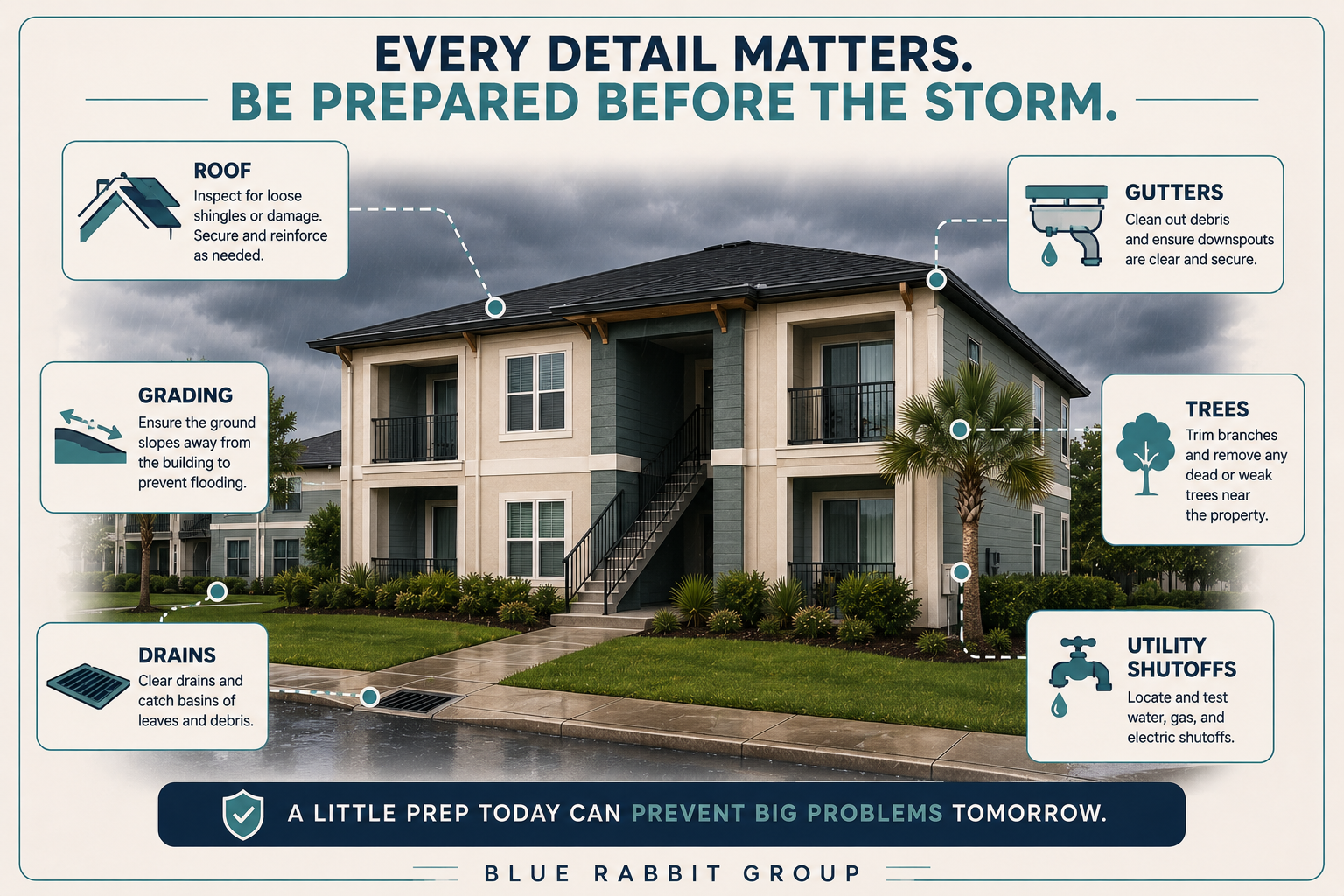
Storm preparation is often less dramatic than owners expect. It starts with drainage, roof details, landscaping, and small maintenance issues that heavy rain can expose quickly.
A good preseason inspection covers four areas.
Drainage
Clear storm drains, catch basins, gutters, downspouts, and French drains
Confirm water moves away from foundations
Check low areas during normal rainfall
Look for erosion, standing water, and blocked discharge points
Roof and Structure
Inspect flashing, sealant, pipe boots, and roof penetrations
Check flat roofs for ponding or soft areas
Confirm attic and roof vents are clear
Review doors, windows, fencing, and exterior attachments
Landscaping and Exterior Items
Remove dead limbs and address hazardous trees
Trim branches near roofs, windows, and utility lines
Identify furniture, signs, grills, or decor that must be secured
Make a plan for trash containers and shared outdoor spaces
Utilities
Test sump pumps and backup power, where applicable
Label water, gas, and electrical shutoffs
Check exterior outlets, disconnects, and panels for water exposure
Confirm who may operate each shutoff during an emergency
One of the best inspections happens during an ordinary rainstorm. That is when you can see where water actually moves. A dry day walkthrough cannot show every drainage problem.
3. Put the Storm Plan in Writing
If the plan lives only in someone’s head, the team will improvise under pressure. Write it down and keep a cloud copy that key people can access.
The owner plan should include:
Policy numbers and broker or claims contacts
Property manager contacts and escalation order
Emergency vendors and backup vendors
Utility shutoff instructions
Prestorm and poststorm inspection checklists
Photography and condition reporting standards
Owner approval limits for emergency work
The process for deciding whether to open a claim
County emergency management and reentry resources
The property manager’s protocol should go one level deeper. It should assign who communicates with tenants, who visits the property, who contacts vendors, and who updates ownership.
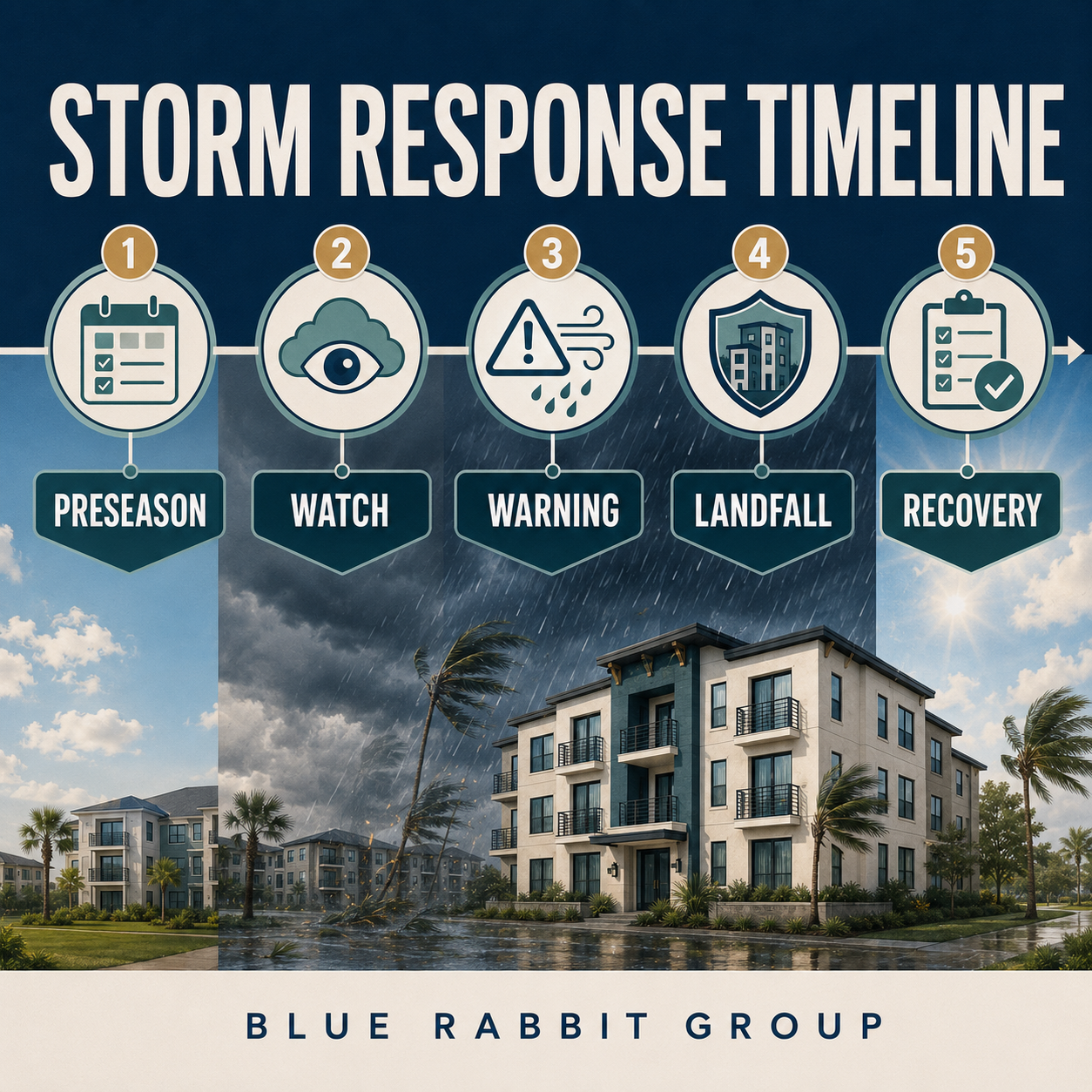
Use time based triggers when possible. Define actions at the start of hurricane season, when a watch is issued, when a warning is issued, and after local officials permit reentry.
A written plan does not need to be complicated. It needs to tell each person what they own and what happens next.
4. Communicate Clearly With Tenants
Residents should not have to guess what management is doing.
A short, building specific message can reduce confusion and help everyone prepare.
Before hurricane season, send tenants:
Property management emergency and nonemergency contacts
Building specific parking and common area instructions
A reminder to review renters insurance
A request to document personal belongings
Instructions for reporting storm related maintenance
Links to county alerts, evacuation routes, and shelter information
A reminder to follow local emergency officials for safety decisions
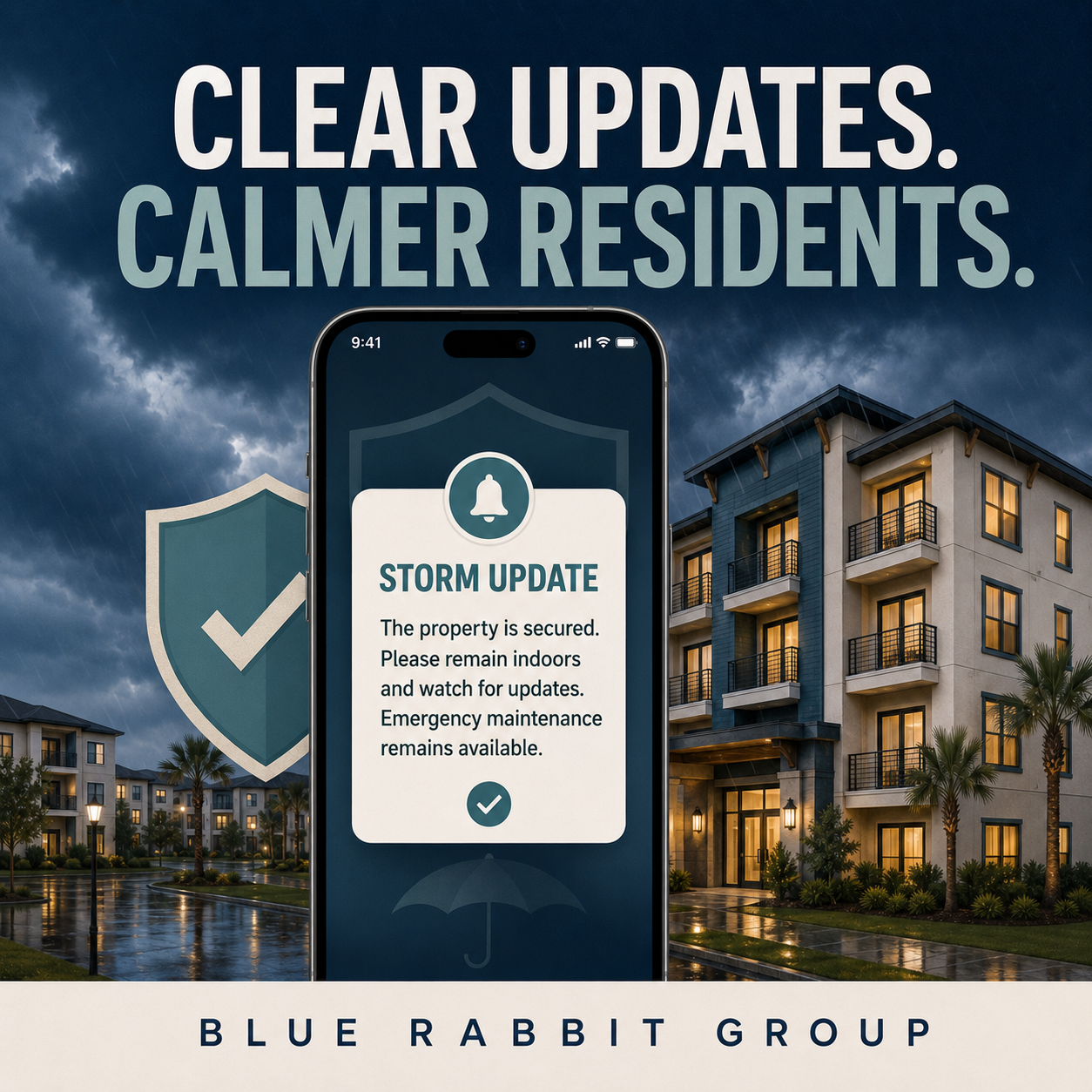
When a storm threatens, send updates only when you have something useful to say. Tell residents what has been completed, what is still pending, and when they will hear from you again.
Never position property management as the source for evacuation or life safety decisions. Point residents to local emergency management and the National Weather Service.
Clear communication helps residents feel supported without making promises you cannot control.
5. Build Vendor Relationships Early
The most important calls after a storm are often the ones made months earlier.
A vendor who already knows the property can respond faster and make better decisions. At minimum, build relationships with:
A roofer who can perform emergency tarping and permanent repairs
A plumber familiar with the property’s shutoffs and supply lines
An electrician who handles emergency calls
A tree company equipped for storm work
A restoration company experienced with water mitigation
A general contractor who can assess broader damage
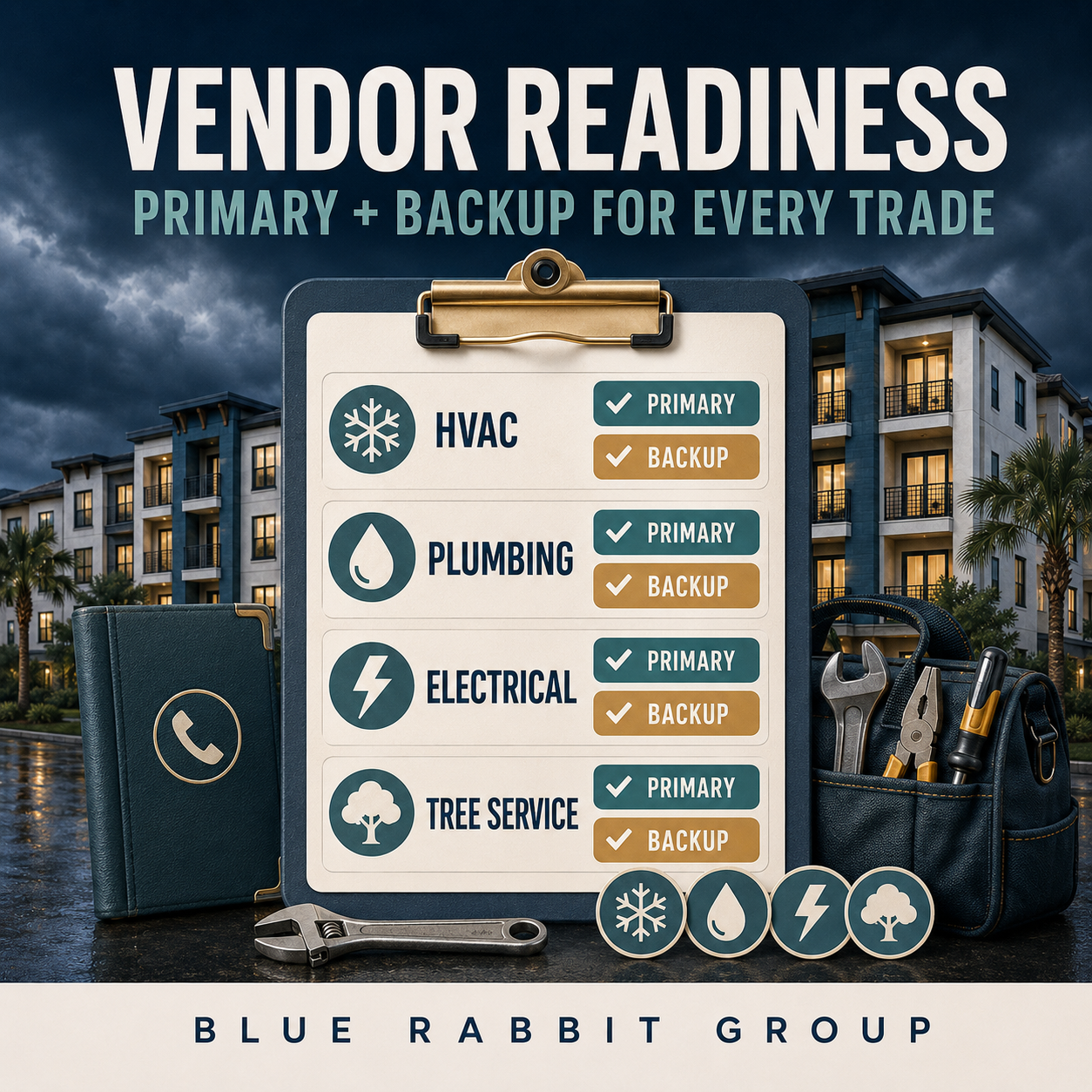
Backup vendors for every critical trade
Keep licenses, insurance records, after hours contacts, and service areas current. Confirm availability before each hurricane season.
A name in a spreadsheet is not yet a relationship. Give critical vendors a reason to know the building before you need an emergency response.
6. Set Authority and Reserves Before the Storm
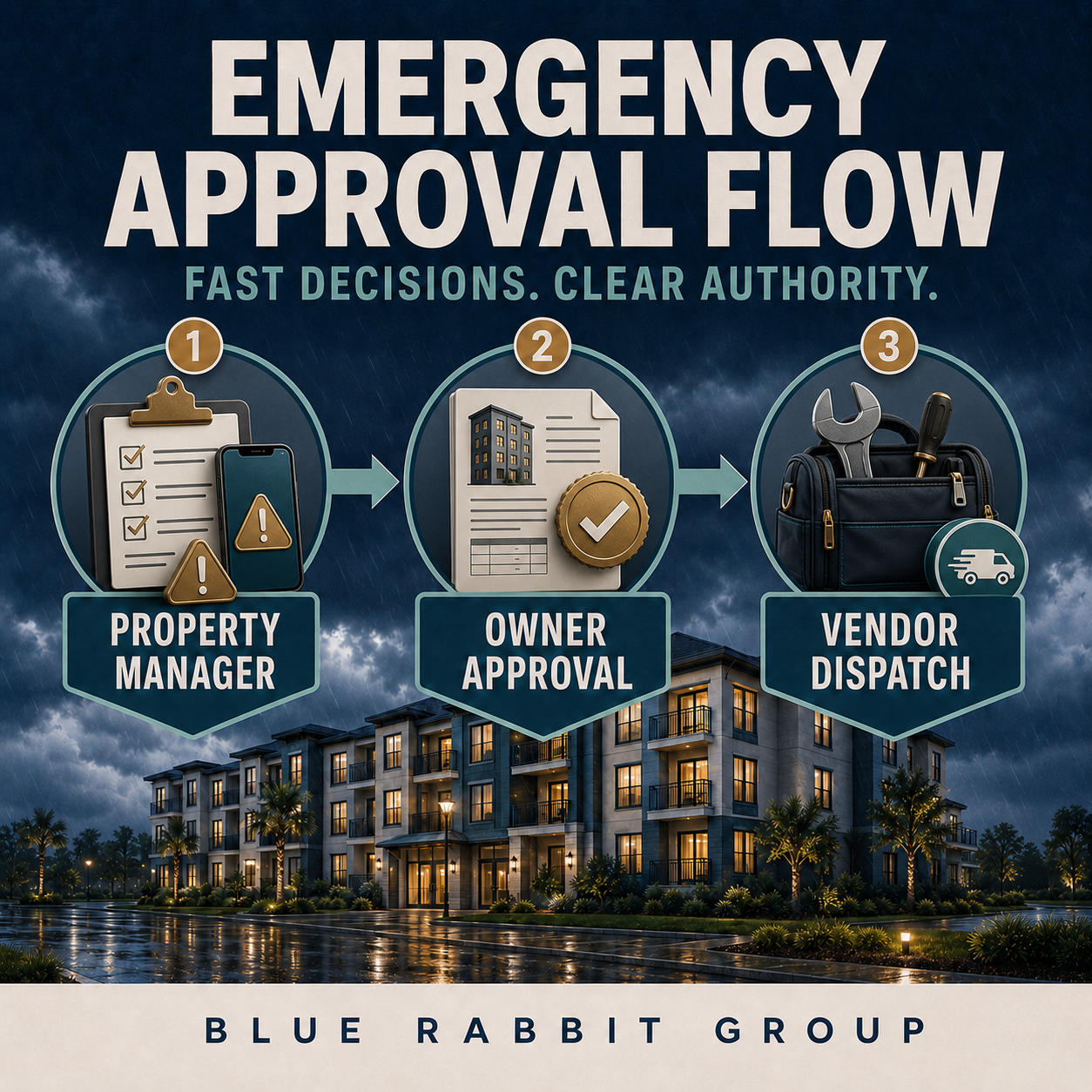
Emergency work slows down when nobody knows who can approve it. Ownership and management should agree on limits before hurricane season.
Document:
The amount management may spend without prior approval
Which actions qualify as emergency mitigation
Who approves work above the limit
How ownership should be contacted if normal channels fail
Which payment methods are available after a storm
The reserve available for immediate repairs
This does not give anyone unlimited authority. It gives the property manager room to protect the asset while ownership remains informed.
The same principle applies to documentation. Decide who captures Photography, written notes, invoices, and vendor reports. Good records help owners, contractors, and insurance professionals work from the same facts.
7. Protect the Whole Building Experience
Boutique multifamily properties are connected systems. Damage in one unit can affect common areas, contractor access, utilities, noise levels, and lease renewals throughout the building.
The poststorm plan should cover more than visible damage. It should also address:
Safe reentry and professional inspection
Temporary access restrictions
Resident updates during repairs
Contractor scheduling around occupied units
Common area cleanup and security
Ongoing moisture monitoring
A final review of what worked and what failed
After local officials allow reentry, safety comes first. Have qualified professionals assess damage before asking staff, residents, or vendors to enter questionable areas.
The operating goal is simple. Protect the structure, communicate honestly, and restore normal living conditions as quickly as conditions allow.
That is how hurricane preparedness supports both asset performance and tenant retention.

[H2] The Annual Multifamily Hurricane Checklist
Complete this review each spring. If the season is already underway, use it as an immediate reset.
Review insurance with the broker
Inspect drainage, roofing, exterior areas, and utilities
Update the written storm plan
Confirm management authority and owner reserves
Verify primary and backup vendors
Send tenant readiness information
Test contact lists and cloud document access
Review county emergency resources
Schedule the poststorm inspection process
Record lessons after every storm or exercise
A few focused hours can expose gaps that become expensive during an emergency. The value is not the checklist itself. The value is knowing that the right person can act without starting from zero.
Frequently Asked Questions
When is Atlantic hurricane season?
Atlantic hurricane season runs from June 1 through November 30. Storms can occur outside those dates, so owners should maintain current insurance, contacts, and emergency procedures throughout the year.
Does property insurance cover hurricane flooding?
Most standard homeowners, renters, and business policies do not cover flood damage. Coverage depends on the policy and cause of loss. Ask a licensed insurance professional to review wind, flood, named storm, and income loss coverage for your property.
When should a multifamily owner begin hurricane preparation?
Start the annual review in April or May. That leaves time for inspections, insurance questions, vendor scheduling, and tenant communication. If the season has already started, complete the review now rather than waiting for a named storm.
What belongs in a multifamily hurricane plan?
Include insurance contacts, vendor lists, utility shutoffs, inspection checklists, tenant communication steps, owner approval limits, documentation standards, and poststorm reporting procedures. Store the plan online and give access to the people responsible for using it.
What should property managers send tenants before a storm?
Send building specific parking and common area instructions, reporting procedures, management contacts, and links to local emergency officials. Remind residents to review renters insurance and document belongings. Keep safety and evacuation guidance tied to official local sources.
Why do small multifamily properties need a different plan?
Several units often share structural systems and common areas. One incident can affect multiple households, rent collection, access, and renewals. The plan must address both the physical property and the resident experience across the building.
Key Takeaways
Insurance is a starting point, not the complete plan.
Drainage and deferred maintenance deserve the same attention as wind exposure.
Written responsibilities prevent delays when conditions change quickly.
Tenant communication should be clear, building specific, and tied to official safety guidance.
Established vendors, approval limits, and reserves help management act when time matters.
Blue Rabbit Group brings a hospitality centered approach to multifamily management across the Southeast. Our management and consulting services help owners strengthen operations, protect tenant experience, and improve long term performance.
If your property needs a stronger storm plan, schedule a conversation with our team. We can review the operational gaps before the next storm finds them for you.
About the Author
Miles Chandler is a co-founder of Blue Rabbit Group. He brings a decade of hospitality and property management experience, including work with Marriott Vacations Worldwide with other hospitality and real estate companies. Miles also holds a South Carolina real estate property management license. Meet the founders.
Sources